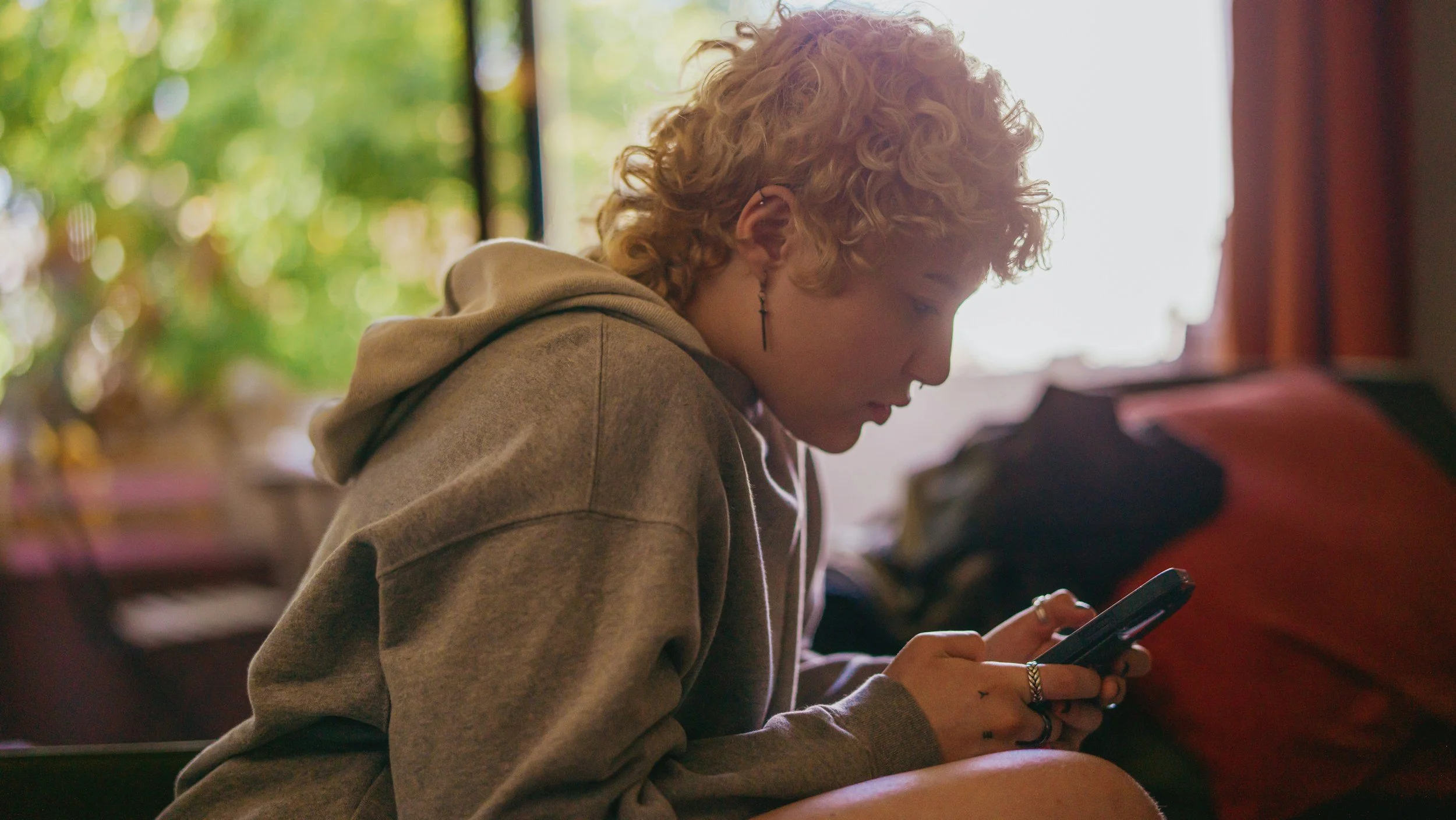
Social media can help college students stay connected, but constant online engagement can also affect self-esteem, relationships, and emotional well-being.
Social media is woven into nearly every part of college life. It is how students stay connected with friends, meet new people, follow campus events, maintain long-distance relationships, and share experiences. Whether you are scrolling through Instagram between classes, watching TikToks before bed, or checking Snapchat to see what everyone is doing, being online can feel like a constant part of being a college student.
But what happens when staying connected starts making you feel more disconnected?
For many college students, social media can contribute to anxiety, loneliness, self-doubt, and pressure to keep up with what everyone else seems to be doing. You might find yourself comparing your social life to someone else's, questioning your appearance, or wondering why your college experience does not look as exciting as the ones you see online.
These feelings can be especially complicated during college, a time when you are already navigating significant changes in your identity, relationships, independence, and sense of belonging.
At Groundwork Therapy, we recognize that social media is not simply good or bad for mental health. It can create opportunities for meaningful connection while also reinforcing insecurities and emotional struggles. Understanding how social media affects your mental health can help you develop a healthier relationship with technology and, more importantly, with yourself.
How Social Media Affects College Students' Mental Health
College is a period of significant personal growth. You may be meeting new people, exploring your identity, navigating romantic relationships, and figuring out what you want your future to look like.
During this time, social media can become another source of pressure.
Unlike previous generations, today's college students often experience their social lives both in person and online. Interactions do not necessarily end when you leave class or return to your apartment. You can see what friends are doing, who attended a party, who is dating whom, and what everyone else seems to be accomplishing.
This constant access to other people's lives can make it difficult to step back and focus on your own experiences.
The Pressure to Compare Yourself to Others
One of the most common ways social media affects mental health is through social comparison.
You might see classmates posting pictures from parties, vacations, internships, or seemingly perfect relationships. Even when you know that social media only shows selected moments, it can be difficult not to compare.
You may start wondering:
Why does everyone else seem to have more friends?
Am I missing out on the college experience?
Why do other people seem more confident or attractive?
Should I be doing more with my time?
Am I falling behind academically or professionally?
Over time, these comparisons can contribute to low self-esteem, anxiety, and feelings of inadequacy.
The difficulty is that you are comparing your everyday experiences, including the difficult and uncertain moments, with carefully selected versions of other people's lives.
You rarely see the awkward conversations, loneliness, academic struggles, or relationship problems that exist outside someone's social media feed.
FOMO and the Fear of Missing Out
The fear of missing out, commonly known as FOMO, can be particularly challenging for college students.
You might be studying for an exam when you see pictures of friends going out. Perhaps you were not invited to a gathering, or you notice that a group of classmates spent time together without you.
Even relatively small interactions can trigger feelings of exclusion.
Social media makes these experiences more visible. In the past, you might not have known about every gathering you missed. Now, you can see photographs and videos of the entire evening while it is happening.
This can create a sense that everyone else is having a better experience.
For students already struggling with social anxiety or loneliness, these experiences can reinforce the belief that they do not belong. They may also make it harder to enjoy the activities and relationships that are already part of their lives.
Body Image and Self-Esteem
Social media can also influence how college students feel about their bodies and appearance.
Images of seemingly perfect bodies, carefully edited photographs, fitness routines, and beauty trends can create unrealistic expectations. Even when you recognize that images are filtered or curated, repeated exposure can affect how you evaluate yourself.
You might become more critical of your appearance or feel pressure to present yourself in a particular way.
This can be especially difficult during college, when identity and self-image are still developing.
The desire to feel attractive, accepted, and desirable is not unusual. However, when your sense of self-worth becomes increasingly tied to likes, comments, followers, or online attention, it can become harder to feel comfortable with yourself outside of that feedback.
Social Media, Loneliness, and College Relationships
Social media creates the impression that we are constantly connected. However, frequent online interaction does not always translate into meaningful relationships.
You might exchange messages throughout the day but still feel that nobody really knows you. You might have hundreds of followers but struggle to identify someone you would feel comfortable calling when you are having a difficult time.
Feeling Connected Without Feeling Known
There is an important difference between being socially connected and feeling emotionally connected.
Social media can make it easier to maintain relationships, especially when friends attend different colleges or live far away. It can also help students find communities based on shared interests, identities, and experiences.
For LGBTQIA+ students, for example, online communities can provide opportunities to connect with others who understand aspects of their experiences.
At the same time, online interactions may not always provide the depth or emotional intimacy that comes from spending time together.
Sometimes, students find themselves maintaining an online version of their social lives while feeling increasingly disconnected in person.
If you are experiencing loneliness despite having an active social media presence, you are not alone. Our article on feeling lonely in Manhattan and navigating isolation in NYC explores why living in a busy, populated environment does not necessarily translate into feeling connected.
Dating, Relationships, and Online Expectations
Social media can also complicate romantic relationships.
Seeing other couples share affectionate photographs, vacations, and milestones can create unrealistic expectations about what relationships should look like.
You may find yourself comparing your relationship to someone else's or questioning whether your partner is sufficiently attentive, affectionate, or committed.
Social media can also introduce concerns about communication, boundaries, jealousy, and trust.
For example, you might become preoccupied with whether someone has viewed your story, why they have not responded to a message, or who they are interacting with online.
These experiences can bring up deeper feelings about rejection, insecurity, and attachment.
The issue is not necessarily the amount of time spent online. It may also involve what certain interactions mean to you emotionally.
The Positive Side of Social Media and Mental Health
It is important to recognize that social media is not inherently harmful.
For many college students, online platforms provide meaningful opportunities for connection, self-expression, and support.
Social media can help students:
Maintain friendships across different colleges and cities.
Find communities based on shared interests and identities.
Access mental health information and educational resources.
Explore questions about gender, sexuality, and identity.
Share creative work and personal experiences.
Find support when navigating difficult life transitions.
Online communities can be particularly valuable for students who feel isolated in their immediate environments.
Social media can also help normalize conversations about anxiety, depression, therapy, and other mental health concerns.
However, it is important to distinguish between helpful mental health information and content that oversimplifies complex psychological experiences. Not every social media post about a diagnosis or therapeutic concept provides accurate or complete information.
The U.S. Surgeon General's Advisory on Social Media and Youth Mental Health discusses both the potential benefits and risks of social media use. Although the advisory focuses primarily on children and adolescents rather than college students, it offers useful context about the relationship between digital environments and emotional well-being.
Developing a Healthier Relationship With Social Media
The goal does not necessarily need to be deleting every social media account or limiting yourself to a strict number of minutes online.
Instead, consider developing a more intentional relationship with the platforms you use.
Pay Attention to How You Feel After Scrolling
One helpful starting point is noticing how social media affects your mood.
Do you feel connected, entertained, or informed? Or do you frequently leave an app feeling anxious, inadequate, jealous, or lonely?
Pay attention to the types of accounts and content that tend to trigger these feelings.
You might decide to unfollow accounts that consistently make you feel worse or adjust your feed to include more content that reflects your interests and values.
Make Space for In-Person Relationships
Online interactions can be meaningful, but they should not become a substitute for every opportunity to connect with people in person.
Consider making time for activities that allow you to build relationships beyond a screen.
This might mean studying with a classmate, joining a campus organization, attending a social event, or making plans with a friend without feeling the need to document the experience.
If you are struggling to form connections, remember that meaningful friendships often develop gradually. You do not need to establish an entire social circle immediately.
Notice When You Are Seeking Validation
It can be helpful to reflect on what you are hoping to get from social media.
Are you posting because you want to share something meaningful? Are you looking for connection? Or are you hoping that a certain number of likes or comments will make you feel better about yourself?
There is nothing inherently wrong with enjoying positive feedback. Most people appreciate feeling noticed and accepted.
However, if your mood increasingly depends on how others respond to your online presence, it may be worth exploring why that validation feels so important.
Give Yourself Permission to Disconnect
You do not need to respond to every message immediately or know what everyone is doing throughout the day.
Try creating opportunities to step away from your phone, particularly when studying, spending time with friends, or getting ready for bed.
The point is not to create another expectation that you have to meet perfectly. It is to give yourself more opportunities to be present in your own life.
Understanding the Deeper Emotional Impact of Social Media
Sometimes, the challenges associated with social media extend beyond screen time or online habits.
For example, if seeing other people together consistently triggers feelings of rejection, it may be helpful to explore where those feelings come from. If you find yourself constantly comparing your appearance or accomplishments to others, there may be deeper insecurities influencing how you experience these interactions.
A relational and psychodynamic approach to therapy can help you understand these patterns.
Rather than focusing exclusively on changing behaviors, this approach considers how your past experiences, relationships, and expectations may influence the way you relate to yourself and other people.
You might begin to understand why certain interactions feel particularly painful, why you seek reassurance in specific ways, or why it is difficult to feel secure in relationships.
At Groundwork Therapy, we believe that meaningful therapeutic work involves understanding the person behind the symptoms. Social media may be one part of the picture, but it can also provide an opportunity to explore questions about identity, self-esteem, belonging, and connection.
If you are interested in learning more about this approach, you can read about relational psychodynamic psychotherapy.
When Should College Students Consider Therapy?
You do not need to be experiencing a mental health crisis to benefit from therapy.
It may be helpful to speak with a therapist if you notice that social media is contributing to persistent anxiety, low self-esteem, loneliness, relationship difficulties, or feelings of disconnection.
You might also consider therapy if you find yourself repeatedly comparing your life to others, struggling to feel comfortable with yourself, or having difficulty developing meaningful relationships.
College is already a period of considerable transition. Having a space to explore these experiences can help you better understand yourself and develop healthier ways of relating to others.
Experience Supporting College Students
Many of our therapists have experience working in college and university counseling centers, where they supported students navigating the unique challenges of college life. This experience informs our understanding of the academic, social, relational, and developmental pressures that can arise during this stage. Whether you are adjusting to college, navigating relationships, exploring your identity, or struggling with anxiety and self-esteem, our therapists understand the complexities of this transition.
At Groundwork Therapy, we provide therapy for college students in Brooklyn, including support for anxiety, depression, identity exploration, relationship challenges, and the transition into adulthood.
Finding Balance Between Your Online and Offline Life
Social media is likely to remain part of college life. It can help you maintain friendships, explore your interests, and find communities where you feel understood.
But your worth is not determined by how many people follow you, how often you are invited somewhere, or how your life looks in photographs.
Your college experience does not need to resemble anyone else's.
Sometimes, developing a healthier relationship with social media starts with understanding your relationship with yourself. Learning to tolerate uncertainty, navigate feelings of exclusion, and build meaningful connections can make a difference both online and offline.
If you are finding it difficult to navigate these experiences, therapy can offer a space to better understand what is happening and what you need.
Groundwork Therapy offers in-person therapy for college students at our Brooklyn office, serving students from Brooklyn and Manhattan, as well as virtual therapy throughout New York State. Our therapists take a relational, psychodynamic approach that helps students explore the deeper emotional and relational experiences shaping their lives.
You do not have to wait until things feel overwhelming to reach out. Contact Groundwork Therapy to learn more about working with a therapist who can support you through this stage of life.